
 Beyond Body Image Struggles: Signs of Emotional Eating and the Search for Perfection
We live in a culture obsessed with the visible. We celebrate the drastic weight loss, the strict gym routines, the rigid meal prep, and the “unwavering discipline.” We look at someone who has successfully molded themselves to fit societal standards and we call it health.
But behind closed doors, that “perfect” exterior is often paid for with an agonizing currency: the complete abandonment of how we actually feel.
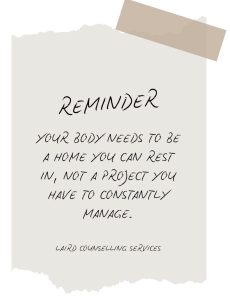
When we treat our bodies like projects to be managed rather than a home to live in, our world shrinks. The pressure to conform to an idealized body image is a universal trap, but it wears different masks depending on who you are.
- For women, it’s often an exhausting game of shrinking—the constant, loud background noise of feeling like you take up too much space, paired with the quiet desperation of using food as the only secret comfort when the emotional load gets too heavy to carry.
- For men, the trap is often wrapped in the armor of hyper-capability. It’s the unspoken pressure to be stoic, built, and physically dominant. Because men are rarely given permission to speak about their body image struggles, the anxiety is driven underground—hidden beneath aggressive workout regimes or channeled into a private, compulsive relationship with food that no one else ever sees.
Whether you are trying to shrink yourself or build yourself into a fortress, the result is the same: you are surviving your life rather than experiencing it.
The Silent Language: Signs of Emotional Eating
When we cut off communication with our internal emotional world, our feelings don’t just vanish. They look for a trapdoor. For many of us, that trapdoor is food.
The signs of emotional eating are rarely about a lack of willpower; they are about a desperate need for a release valve. They show up in the quiet, ordinary moments of your week:
- The “Numbing Out” Ritual: It’s eating standing up in the kitchen after everyone else has gone to bed. You aren’t tasting the food, and you aren’t hungry. You are just seeking a temporary chemical truce for a nervous system that has been white-knuckling its way through the day.
- The Pendulum of Control: Spending your entire week obsessively managing every macro and calorie, only to have the dam break over the weekend. The ensuing binge isn’t driven by an appetite for food—it’s an appetite for relief from your own rigid rules.
- The Emotional Tax on Presence: Sitting at a dinner table with people you love, but you are entirely absent. You aren’t listening to the conversation because your mind is locked in an exhausting loop of self-judgment, calculating the caloric “damage” of your plate, or plotting how you’ll restrict yourself tomorrow to make up for it.
When this cycle takes over, it robs you of your quality of life. Genuine fulfillment is replaced by a constant, low-grade anxiety.
You start turning down social invitations, avoiding intimacy, and pulling away from the things that used to bring you joy, all because the mental real estate required to manage your body has taken over everything else.
Moving Beyond the Rules
If this is your daily reality, please hear this: you cannot discipline your way out of a conflict that is rooted in emotional pain. You cannot shame a body into healing when it is starving for safety.
Your relationship with food isn’t broken because you lack strength; it’s strained because food has been forced to do the heavy lifting for emotions that have nowhere else to go.
Reclaiming Your Life: Therapy for Emotional Eating
True vitality doesn’t look like a specific number on a scale or a hyper-controlled diet plan. It looks like peace. It looks like being able to eat a meal without a side of guilt, and occupying your body without apologizing for it.
At our clinic, therapy for emotional eating is designed to break the cycle of perfectionism. We provide a warm, deeply empathetic, and entirely judgment-free space where both men and women can safely unpack the societal pressures and internal hurts driving these behaviors.
We don’t focus on giving you a new list of rules to follow. Instead, we work with you to understand the emotional hunger beneath the surface, helping you build a genuine, healing relationship with food and yourself.
You don’t have to keep fighting this battle in silence. If you are ready to stop just surviving and start living a more fulfilling, connected life, reach out to us today to schedule an introductory consultation.

Cheryl is a Registered Psychotherapist focusing on body image, binge eating, and emotional healing.