
Anxiety, Depression, Body Image, Emotional Eating, Addictions, Insomnia, and More.

Tag: Guelph therapist

When Sleep Feels Out of Reach: How CBT-I Can Help You Reclaim Your Nights

If you are reading this in the middle of the night, watching the numbers on your alarm clock tick steadily forward while your mind races, I want you to pause and take a deep breath.

First, know that you are not broken. Second, know that you are not alone.

As a registered psychotherapist at Laird Counselling Services, I speak with individuals every week who feel completely exhausted by their relationship with sleep. They have tried the warm tea, the lavender pillow sprays, the blackout curtains, and the strict rules about screen time. Yet night after night, the moment their head hits the pillow, their brain turns on like a light switch.

When chronic insomnia takes hold, bedtime stops feeling like a sanctuary and starts feeling like a battleground. Fortunately, there is a gentle, proven, and lasting way back to restful sleep that does not rely on medication.

It is called Cognitive Behavioural Therapy for Insomnia (CBT-I).

Why Insomnia Becomes a Cycle

To understand how CBT-I works, it helps to look at how insomnia tricks our brains.

Usually, acute insomnia starts with an initial stressor. It might be a difficult project at work, a period of grief, or a major life transition. Over time, even after that original stressor passes, the fear of not sleeping takes over.

You lie in bed worrying about how tired you will be tomorrow. Your heart rate rises, and your brain begins to view the bed as a place of frustration rather than rest. Slowly, a predictable pattern forms:

  1. Anxiety about sleep triggers physical tension.
  2. Physical tension keeps your body locked in “fight-or-flight” mode. 3. Being awake in bed trains your brain to associate your mattress with stress, completing the loop.

This cycle is exhausting, isolating, and deeply frustrating. However, because this response was learned, it can also be unlearned.

What is Cognitive Behavioural Therapy for Insomnia (CBT-I)?

Cognitive Behavioural Therapy for Insomnia is an evidence-based, structured approach that targets the underlying thoughts, feelings, and habits keeping you awake. Rather than just offering generic sleep hygiene tips, a trained CBT-I therapist addresses the root causes of chronic sleep anxiety.

Here is how we break that cycle together in therapy:

  1. Rewiring the “Bed Equals Awake” Association

When you spend hours tossing and turning, your brain starts linking your bed to frustration. In CBT-I, we use targeted behavioral techniques to re-establish your bed as a space reserved exclusively for sleep and intimacy. We help your brain relearn that when your head hits the pillow, it is safe to turn off.

  1. Quieting the Nighttime Mind

Do thoughts like, “If I don’t sleep right now, my whole week is ruined” sound familiar? These worries are completely understandable, but they create a surge of adrenaline that makes falling asleep impossible. We help you identify these anxious sleep stories, challenge them, and replace them with calmer, realistic perspectives that allow your nervous system to settle.

  1. Resetting Your Natural Sleep Drive

Many people struggling with insomnia try to compensate by going to bed earlier or staying in bed later. Counterintuitively, this often dilutes your sleep quality. CBT-I helps consolidate your sleep schedule so that when you do go to bed, your body’s natural drive for deep sleep is strong and consistent.

What CBT-I Therapy Looks Like at Laird Counselling

At Laird Counselling, we never view sleep struggles as a failure of willpower. Your body knows how to sleep; it has simply forgotten the way under the weight of stress and habit.

In our therapy sessions, we walk beside you step by step. We listen closely to your unique routine, your specific worries, and your personal history. There is no judgment here, only a supportive, structured environment designed to help you regain control over your nights and feel present in your days again.

A Gentle First Step to Try Tonight:

If you find yourself lying awake for more than 20 minutes tonight, do not force it. Gently get out of bed, move to a dimly lit room, and do something quiet until you feel drowsy. Give yourself permission to rest your mind, even if sleep has not arrived just yet.

You Do Not Have to Figure This Out Alone

Persistent sleep issues take a heavy toll on your energy, your mood, and your overall quality of life, but you do not have to carry this exhaustion forever. CBT-I offers a clear, evidence-based roadmap back to peaceful rest.

If you are ready to stop fighting with sleep and want to explore insomnia treatment options, please reach out to our team at Laird Counselling. We would be honored to help you find your rest again.

Cheryl is a Registered Psychotherapist focusing on insomnia, body image, binge eating, and emotional healing.


Navigating Body Image Grief

We are told a beautiful, seductive lie by the wellness industry: that if we just try hard enough, eat clean enough, and think positively enough, we can bypass the messy reality of having an actual, physical body.

We are sold a fantasy of a future body. one that is permanently energetic, perfectly proportioned, and impervious to aging, stress, or change. We treat this future, idealized version of ourselves not just as a goal, but as the real starting point of our lives: “When I lose the weight…” “When I tone up…” “When I finally fix this…”

But what happens when we realize that the pursuit of it is costing us our sanity, our presence, and our relationships today?

If you are exhausted from fighting your own reflection, you are not failing at self-care. You might actually be experiencing something much deeper: body image grief.

We cannot inhabit a home we are constantly trying to demolish. Healing begins not when we force ourselves to love what we see in the mirror, but when we allow ourselves to mourn the fantasy body we were promised, so we can finally show up for the one we actually live in.”

Understanding Body Image Grief

Grief is a word we usually reserve for the loss of a loved one, a career, or a dream. But grief is also the natural human response to letting go of an expectation. When you decide to step off the relentless treadmill of dieting, intense exercise regimens, or hyper-vigilance, there is a profound sense of relief, but there is also a quiet, unexpected wave of sorrow.

To heal your relationship with your body, you must first grieve. You have to mourn:

  • The Fantasy of the “Perfect” Body: Acknowledging that the idealized, airbrushed version of you that society demands may never exist, and that keeping it on a pedestal is keeping you from living.
  • The Time and Energy Lost: Feeling the weight of the years, months, and hours spent counting calories, staring critically at changing reflections, and missing out on memories because you felt too uncomfortable in your skin to participate.
  • The Illusion of Safety: Recognizing that a smaller or more muscular body is not a shield against life’s difficulties, rejection, or vulnerability.

Grief is not a sign that you are moving backward. It is the precise gateway to moving forward. When we allow ourselves to mourn the body we thought we “should” have, we free up the immense energy required to tend to the body we actually do have.

Moving From Comparison to Somatic Connection

Our culture teaches us to view our bodies from the outside in. We look at ourselves through an external camera lens, constantly evaluating, judging, and comparing. This is a cognitive trap. You cannot think your way into loving your body if your primary relationship with it is analytical and critical.

To change how you feel about your body, you have to change how you inhabit it. This shift from external critique to internal awareness is called somatic connection. It is the practice of feeling your body from the inside out:

  • Shift from “How do I look?” to “How do I feel?”: When you sit down at your desk or walk into a room, take a breath. Feel the support of the chair underneath you. Notice the rise and fall of your chest. Feel the solid earth beneath your feet.
  • Find Movement for Pleasure, Not Punishment: Move your body because it feels good to stretch, to breathe, or to sweat—not to pay a physical fine for what you ate the night before.
  • Acknowledge Your Body’s Daily Labors: Your body is constantly working to keep you alive. It pumps blood, digests food, heals cuts, and takes in oxygen without you ever having to ask. It is an ally, not an adversary.

Therapy for Body Image and Self-Acceptance

True body acceptance is not about looking in the mirror and forcing yourself to repeat positive affirmations you don’t believe. It is about a quiet cessation of hostilities. It is the relief of declaring a truce with your own physical form.

At our clinic, we recognize that body image struggles are never just about skin, muscle, or bone. They are deeply tied to our need for safety, belonging, and worth. We provide a compassionate, trauma-informed space to help you untangle your self-worth from societal standards.

We work with you to process the underlying grief, quiet the loud voice of comparison, and build a gentle, somatic connection to yourself. You do not have to wait until your body changes to start living your life. You are allowed to take up space, feel peace, and find belonging exactly as you are today.

If you are ready to stop waiting for a future version of yourself to start living, we are here to support you.

Reach out to schedule a gentle, supportive consultation with us today.

Book a no fee consultation

Cheryl is a Registered Psychotherapist focusing on body image, binge eating, and emotional healing.

If You Feel Constantly On Edge or Too Exhausted to Focus, Here Is What Is Actually Happening

We live in a world that throws the words “anxious” and “depressed” around casually. We use them to describe a stressful afternoon at work or a rainy weekend afternoon.

But behind the closed doors of my practice, I see a fundamentally different reality. I sit across from brilliant, highly capable people every day who run businesses, manage teams, and keep entire households organized—yet feel entirely paralyzed when it comes to their own internal world.

If you know that feeling, you’ve probably spent a long time blaming your willpower. You’ve told  yourself that if you were just a little more disciplined, or if you tried just a little bit harder tomorrow, you could finally shake the heavy fog or stop the racing thoughts.

When you see a healthcare professional, they often use standard clinical tools like the GAD-7 screening for anxiety and the PHQ-9 for depression. But you don’t live your life inside a clinical checklist. You live it at your desk, in your car, and in your relationships. To truly find relief, we have to look past the medical numbers and address how these conditions actively disrupt your daily life.

How Anxiety and Depression Intersect to Drain Your Daily Energy

Though our culture treats anxiety and depression like opposites—one makes you wired, the other makes you low—the physical reality inside your body tells a completely different story. On a clinical scale, both conditions share massive real estate: poor sleep, an overwhelming lack of energy, trouble concentrating, and intense physical restlessness.

In daily life, this looks like high-functioning anxiety running your battery straight into the ground. You wake up after eight hours of sleep feeling like you haven’t rested in a year. The most basic tasks feel like hiking up a mountain through deep mud. Your system is running on empty because it is burning all its fuel just trying to survive.

Why Does Your Mind Turn Everyday Worries Into a High-Stakes Survival Situation?

When anxiety takes over, clinical measures focus on feeling nervous or on edge, an inability to stop or control worrying, and a persistent feeling that something awful might happen. In your everyday routine, this is your body’s internal alarm system getting permanently jammed on the high setting. It feels like living with an invisible baseline hum of static electricity right beneath your skin.

Your shoulders are up to your ears, your jaw is permanently clenched, and your mind feels like a game of toxic Whack-A-Mole. The moment you solve one problem, your brain immediately transfers that exact same level of panic to a new target. Your mind is simply trying to create thoughts that match the high level of adrenaline pumping through your system.

The Depressive Fog: Why Chronic Exhaustion Quietly Shuts Down Your Motivation

When the system completely burns out from holding that anxiety static at bay, the symptoms of depression roll in. Clinical diagnostic tools look for little interest or pleasure in doing things, feeling down or hopeless, and feeling like a failure who has let everyone down.

This is the exact moment the engine shuts off entirely.

Depression pulls a heavy veil over the world, making the hobbies, conversations, and routines that used to bring you genuine joy feel completely flat and empty. It whispers a cruel lie into your ear: that you are a burden, and that tomorrow will feel exactly like today. It strips away your ability to stay present, leaving you feeling entirely isolated even in a room full of people who love you.

Why True Relief Requires Moving Away From Rigid Rules and
Toward Nervous System Regulation

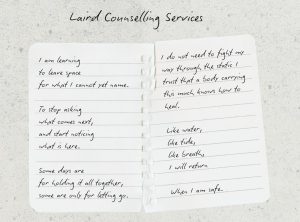
Your struggle with your mental health isn’t heavy because you lack character or strength. It’s heavy because your nervous system has been forced to do the heavy lifting for chronic pressure, stress, or old hurts that have nowhere else to safely go. You cannot fix an internal conflict rooted in pain by forcing yourself into a tighter cage.

Real healing doesn’t come from forcing yourself into a stricter routine to fix a body that is crying out for rest.

It happens when we step back from the daily rush and move away from rigid rules toward genuine nervous system regulation. When your body learns how to process stress without entering a state of total survival overwhelm, your day-to-day functioning naturally begins to soften.

Do You Want to Reclaim Your Day-to-Day Focus?

At my clinic, therapy for anxiety and depression is focused entirely on creating safety. Instead, we work with you to understand what the invisible pressure is that your system is trying to protect you from, helping your body find true relief in a sustainable, gentle way.

You don’t have to keep struggling your way through the daily static, and you don’t have to carry this heavy armor alone. If you are ready to break the cycle and find a peaceful way forward, reach out to us today to schedule a gentle, entirely judgment-free introductory consultation.

For a free no-pressure consultation, book here.

Cheryl is a Registered Psychotherapist focusing on stress, worry, and mood regulation.

Overeating, Emotional Eating, or Binge Eating?

We live in a culture that loves to label everything. If you eat an extra slice of cake at a birthday party, someone calls it a “cheat day.” If you have a stressful afternoon at work and reach for a bag of chips, you might jokingly tell a coworker you’re “stress eating.”

But behind closed doors in my practice, these terms carry a lot more weight.

I often sit across from brilliant, highly capable people who look at me with a mix of exhaustion and confusion and ask: “Am I just greedy, am I an emotional eater, or is this something much deeper?”

If you’ve found yourself scrolling through late-night articles trying to figure out if your relationship with food is a temporary habit or a deep-rooted cycle, you aren’t alone. Let’s pull back the clinical curtain and look at the real difference between overeating, emotional eating, and binge eating—not to give you a label to hide behind, but to help you understand what your body is actually trying to tell you.

1. Overeating

Let’s start with the most common one. Overeating is, at its core, a physical event.

It happens when the food is incredibly delicious, the environment is social, or you simply missed your body’s subtle “I’m full” cues. Think of a holiday celebration, a backyard BBQ with friends, or trying a brand-new restaurant. You eat past the point of comfortable fullness, your jeans feel a little too tight, and you might think, “Oof, I definitely didn’t need that last taco.”

The Key Identifiers:

  • The Presence: You are usually fully present and conscious while it’s happening. You’re talking, tasting, and enjoying.
  • The Aftermath: There might be slight physical regret, but there isn’t a crushing wave of existential guilt. You don’t wake up the next morning feeling like a fundamentally broken person; you just move on with your week.

2. Emotional Eating

Emotional eating is where the nervous system enters the chat. This isn’t about physical hunger at all; it’s about using food to shift, numb, or change an internal emotional state.

You finish a brutal day at the office, or you have a tense conversation with your partner, and suddenly the pantry starts calling your name. You aren’t seeking fuel; you are seeking comfort, distraction, or a reward. Food becomes a quick, reliable way to access a hit of dopamine when reality feels a bit too sharp or draining.

The truth about emotional eating: It is a deeply human coping mechanism. In a world that demands we constantly “perform,” food is sometimes the quickest way to create a boundary of comfort around ourselves.

The Key Identifiers:

  • The Trigger: It is almost always preceded by a specific feeling—boredom, loneliness, stress, or exhaustion.
  • The Scale: While you might eat more than you intended, there is still a baseline level of control. You might eat half a pint of ice cream while watching a movie to soothe yourself, but you don’t feel entirely disconnected from your own body while doing it.

3. Binge Eating

This is where the shift becomes profound. The difference between overeating and binge eating isn’t just about the volume of food; it’s about the total loss of agency.

When a binge happens, it feels like an out-of-body experience. The autopilot takes over, the fog rolls in, and it feels as though someone else has taken the steering wheel. It is a desperate, biological attempt by an overwhelmed nervous system to find a temporary chemical truce from an internal pressure cooker that has become too loud to bear.

If emotional eating is a blanket, binge eating is an emergency escape hatch.

The Key Identifiers:

  • The Dissociation: You often eat incredibly fast, sometimes without even tasting the food, feeling completely disconnected from the room around you.
  • The Secrecy and Shame: It almost always happens in isolation, hidden from the world. The aftermath isn’t just a tight waistband—it is a heavy, suffocating wave of food shame and a deep feeling of powerlessness.
  • The Restriction Loop: The morning after a binge, the immediate instinct is to build a tighter cage. You promise to restrict your food, skip breakfast, or start a strict new routine. But that very restriction creates the deprivation that triggers the next absolute depletion.

Moving From Labels to True Regulation

If you are reading this and recognizing yourself in the deeper end of this spectrum, please hear this: Your body is not broken, and you are not uniquely weak-willed.

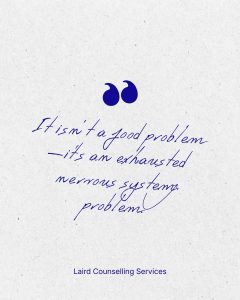
Whether it is emotional eating vs binge eating, the behavior isn’t proof of a character flaw. It is a sign that food has been forced to do the heavy lifting for emotions, chronic stress, or trauma that simply have nowhere else to go. You cannot shame yourself into a peaceful relationship with food, and you cannot discipline your way out of deep emotional exhaustion.

Real healing doesn’t come from memorizing definitions or forcing yourself into stricter rules. It happens when we step away from the kitchen entirely and start looking at how your nervous system processes safety.

Here are a few questions to consider as you start to restore your nervous system?

  • How do you care for yourself?
  • When do you rest? (Not the same as sleeping or watching TV)
  • Can you set boundaries (without excessive guilt)?
  • Do you know how you are feeling?
  • Can you identify your emotions in the moment?
  • What are your hobbies?
  • How often do you get together with friends and loved ones?
  • Do you pursue your passions?
  • Can you be gentle with yourself when things aren’t going well?

As you ponder these questions, please know that you are not alone in your journey.  If you have any questions, do not hesitate to reach out.

Cheryl is a Registered Psychotherapist focusing on body image, disordered eating, and emotional healing.

You Cannot Punish a Body Into Safety

Understanding the Binge Eating Cycle

For so many people who experience a compulsive relationship with food, the heaviest weight isn’t the physical discomfort—it’s the intense isolation that settles in after the fog clears.

It’s that quiet moment in the kitchen, looking at an empty wrapper or an open pantry, wondering how someone who is so capable, so organized, and so put-together in every other area of life could feel so completely powerless here.

If you know that feeling, you’ve probably spent a long time blaming your willpower. You’ve probably told yourself that if you were just a little more disciplined, or if you tried just a little bit harder tomorrow, you could finally fix it.

But behind closed doors in my practice, I see something entirely different. I don’t see a failure of strength.

I see an overwhelmed nervous system using the only survival tool it has left to find a temporary moment of peace. The Anatomy of the Binge Eating Cycle To find a way out, we have to understand that the binge eating cycle doesn’t actually start in the kitchen.

It starts hours, sometimes days, before the first bite is taken, fueled by an invisible pressure cooker.

It begins quietly as you go through your week swallowing your stress, taking care of everyone else, ignoring your own boundaries, and holding everything together with a tight grip. You white-knuckle your way through the day, performing perfectly, while the emotional weight builds up to a point of absolute depletion.

When the break finally happens, it isn’t an act of greed—it is a desperate biological attempt to numb the noise, shut off the racing thoughts, and find a safe place to land when reality feels too heavy to carry.

The Trap of Food Shame and Restriction

But then comes the crash, bringing a crushing wave of food shame. To cope with the guilt, you promise yourself that tomorrow will be different, vowing to restrict more, eat cleaner, and fight harder.

And just like that, the trap snaps shut.

The new restrictions create a deep sense of physical and emotional deprivation, which inevitably fuels the next wave of pressure.

Shame does not heal.

It just adds more pressure to an already exhausted system, forcing your body to look for a release valve even sooner.

The deepest flaw in how our culture views these struggles is the idea that we can punish ourselves into doing better.

Every time you beat yourself up, call yourself weak, and vow to restrict your food tomorrow, you accidentally light the fuse for the next time.

Moving Beyond the Rules to Emotional Regulation

Your relationship with food isn’t strained because you lack character or strength. It’s strained because food has been forced to do the heavy lifting for emotions, trauma, or stress that have nowhere else to go.

You cannot fix an internal conflict rooted in pain by forcing yourself into a tighter cage. True healing requires moving away from rigid rules and moving toward genuine emotional regulation.

When the nervous system learns how to process stress without entering a state of total overwhelm, the compulsive need to numb out naturally begins to soften.

Finding Room to Breathe: Therapy for Binge Eating

At our clinic, therapy for binge eating is focused entirely on creating safety.

We don’t hand you a meal plan, track your metrics, or judge your choices. Instead, we work with you to understand what the behavior is trying to protect you from, helping your body find true relief in a sustainable, gentle way.

You don’t have to keep navigating this heavy ground by yourself, and you don’t have to keep fighting it in the dark. If you are ready to break the cycle and find a peaceful way forward, reach out to us today to schedule an introductory consultation.


Cheryl Laird is a Registered Psychotherapist focusing on body image, binge eating, and emotional healing.