
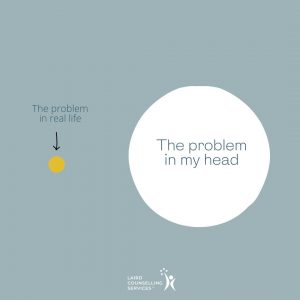
 It’s easy to get caught up in our problems and feel like they are the biggest obstacles in our lives. However, it’s important to take a step back and gain some perspective. Oftentimes, the problems we face may not be as significant as we initially perceive them to be.
One way to gain perspective is to focus on the bigger picture. Think about your life as a whole and all the things you have to be grateful for. Consider the challenges that others face and how your problems may pale in comparison.
Another way to gain perspective is to take action towards solving your problem. When we actively work towards a solution, we gain a sense of control and empowerment. This can help to minimize the significance of the problem.
Getting the perspective of a trusted friend, mentor or therapist can also help you get a more realistic sense of the problem, and your approach to handling it.
Category: Uncategorized Page 2 of 3
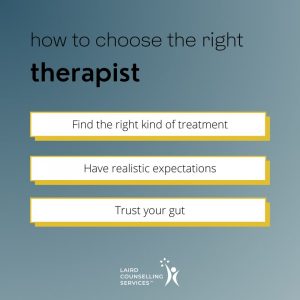 When life throws challenges your way, having a supportive place to turn to can make all the difference.
At Laird Counselling Services, our goal is to provide just that. We offer a non-judgmental space where you can learn new skills to navigate through struggles, challenges, and changes.
We believe that therapy is a collaborative process, where meaningful conversations and exploration of your inner strengths and goals take place. Let us help you on your journey towards a healthy, fulfilling life. Visit our website to learn more about our therapists and the transformative work we do.
 Struggling with sleepless nights? You may want to consider Cognitive-Behavioural Therapy for Insomnia (CBTi) as a non-medicinal approach to reclaiming your sleep.

 Understanding CBTi:
Cognitive-Behavioural Therapy for Insomnia is a proven and effective therapeutic approach designed to address the root causes of sleep difficulties. It goes beyond temporary fixes, focusing on sustainable solutions for long-term sleep health. Key Components of CBTi:
Cognitive Restructuring: Identifying and challenging negative thought patterns related to sleep.
Sleep Hygiene Education: Establishing healthy sleep habits and a conducive sleep environment.
Stimulus Control: Regulating activities and associations with the bedroom to enhance sleep.
Sleep Restriction: Tailoring sleep schedules to improve sleep efficiency.
Relaxation Techniques: Incorporating methods to reduce anxiety and promote relaxation. Why Choose CBTi:
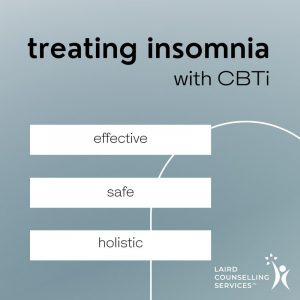
Effectiveness: CBTi has demonstrated effectiveness in improving sleep quality and duration.
Safety: Being a non-medicinal approach, CBTi avoids the potential risks associated with prolonged use of sleeping pills.
Holistic Focus: It addresses not only symptoms but also underlying factors contributing to insomnia, promoting overall well-being.
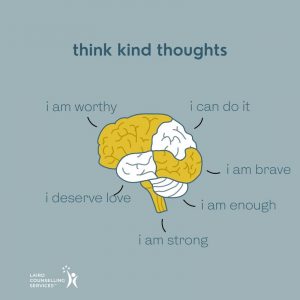 By speaking to ourselves with kindness, compassion, and positivity, we can change the way we view ourselves and the world around us. When we practice positive or kind self-talk, we are more likely to believe in ourselves, set goals, and overcome challenges.
We can also reduce stress and anxiety by replacing negative thoughts with positive affirmations. It’s important to remember that self-talk is not just about what we say to ourselves, but also how we say it. Using a gentle tone and choosing words that are encouraging and uplifting can make a big difference in how we feel about ourselves.
So, let’s make a conscious effort to be kind to ourselves every day.
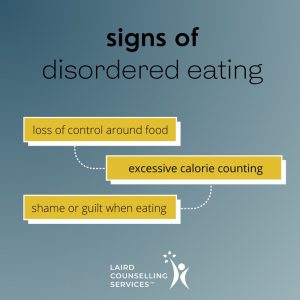 Are you worried that you might be caught in the cycle of disordered eating? It can be challenging to comprehend the complexities of an eating disorder, and discussing your concerns with others might feel daunting. However, dealing with an eating disorder in isolation can be painful and potentially dangerous.
Take a moment to reflect on your relationship with food:
Do you feel a loss of control around food?
Do you categorize food as “good” or “bad” and avoid certain foods?
Do you experience shame or guilt when you eat forbidden foods?
Do you compensate by restricting, purging, or excessive exercise?
Do you try to limit your caloric intake or portion sizes?
Do you fear gaining weight?
Do you avoid social events, work, or school due to body dissatisfaction?
Do you feel anxious eating in front of others?
Do you go long periods without eating?
If you restrict, do you binge in solitude?
Do you hide or hoard food?
Do you prefer to eat alone?
If you suspect you may be struggling with disordered eating, it’s crucial to seek support from a licensed professional who understands your experiences. Thankfully, there are effective ways to restore a healthy relationship with food and cultivate confidence in your ability to make life-affirming choices for yourself.
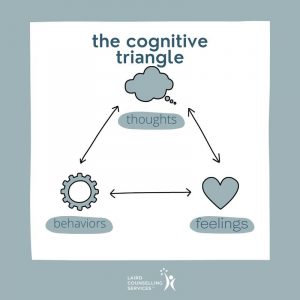 The cognitive triangle is a model that represents the interconnectedness of thoughts, feelings, and behaviors. It is a helpful tool for understanding how our thoughts, emotions, and actions are interconnected and influence each other.
When we have a ‘negative’ thought, it can lead to negative emotions and behaviors. For example, if we think, “I’m not good enough,” we may feel sad, anxious, or hopeless, and we may behave in ways that reinforce that negative thought, such as avoiding challenges or giving up on our goals.
By understanding the cognitive triangle, we can become more aware of our negative thought patterns, challenge them, and be more intentional about our behaviours. This can lead to improved emotional well-being, as well as more positive behaviors that align with our values and goals.
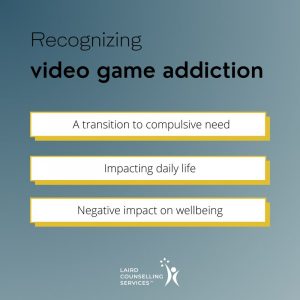 Let’s talk about video game addiction:
🎮 The Pleasure-Driven Motivation:
At its core, video gaming often begins as a source of pleasure and enjoyment. Whether it’s the thrill of exploration, the satisfaction of completing challenges, or the camaraderie in online multiplayer settings, these experiences contribute positively to individuals’ lives.
🔄 Transitioning to Compulsive Need:
However, the journey from pleasure to potential addiction is marked by a subtle shift. It’s crucial to notice when the initial motivations transform into a compulsive need—a point where the desire to play overrides other essential aspects of life. This shift becomes particularly evident when activities like neglecting schoolwork or abandoning responsibilities take center stage.
🚸 Recognizing Adverse Consequences:
The key to understanding this transition lies in recognizing the negative consequences that accompany compulsive gaming behavior. As the immersive world of video games captivates individuals, it may lead to a neglect of academic commitments, strained interpersonal relationships, and a general decline in overall well-being.
⚖️ Striking the Balance:
Striking a balance between positive engagement and potential pitfalls involves fostering a mindful approach to gaming. It’s about being aware of the time spent, the impact on daily responsibilities, and the overall well-being of the individual. This awareness empowers individuals to enjoy the benefits of gaming without succumbing to its potential drawbacks.
🤝 Encouraging Responsible Gaming:
Promoting responsible gaming habits is a shared responsibility. Parents, educators, and gamers themselves can play pivotal roles in creating a healthy gaming environment. Establishing open communication, setting time limits, and encouraging diverse activities beyond the screen contribute to a well-rounded and positive gaming experience. Working with a therapist can provide valuable insights and strategies to cultivate a mindful approach to video gaming, fostering a balanced approach to gaming.
 Have you ever come across the phrase, “love the skin you’re in”? In a world inundated with unrealistic and unhealthy standards of beauty, it’s easy to feel like we’re constantly falling short. This can lead to a cycle of disappointment, damaging our self-esteem, self-confidence, and impacting other vital areas of our lives, including relationships, performance, and overall well-being.
So, what exactly is body confidence? It’s about wholeheartedly accepting every part of yourself without conditions. When we strive for unrealistic and unhealthy ideals, we’re setting ourselves up for failure, making it impossible to attain true confidence in our own unique bodies.
Now is the perfect time to restore your relationship with your body. It’s a crucial step in your personal journey towards reclaiming your right to live life to the fullest, free from the constraints of internalized messages dictating how you should look.
Your worth extends far beyond societal standards. By cultivating body confidence, you’re reclaiming your power and embracing a life where joy, self-acceptance, and unlimited possibilities abound.

Today, let’s celebrate International No Diet Day—a day dedicated to promoting body acceptance, challenging harmful beauty standards, and fostering a culture of self-love and empowerment. Join me in embracing this powerful movement and redefining our relationship with food and our bodies! Breaking Free from Diet Culture: Recognizing the Harmful Impact
Diet culture perpetuates harmful ideals and unrealistic beauty standards that can have damaging effects on our physical and mental health. The constant pressure to attain a certain body size or shape often leads to restrictive eating habits, disordered eating patterns, and negative self-image. Let’s say no to diets that promote deprivation and self-criticism, and instead, choose to nourish our bodies with kindness and compassion. Linking Dieting and Eating Disorders: Understanding the Connection
It’s important to recognize that dieting can serve as a gateway to eating disorders. What starts as a harmless attempt to lose weight can quickly spiral into a dangerous obsession with food, calories, and body image. Let’s break the cycle of dieting and acknowledge the serious consequences it can have on our mental and emotional well-being. Cultivating a Healthy Relationship with Food and Body
Instead of focusing on restrictive diets and unrealistic beauty standards, let’s shift our perspective and embrace a more holistic approach to health and wellness. Let’s honor our bodies as they are, appreciate their resilience and strength, and nourish them with balanced meals and intuitive eating practices. Let’s celebrate the joy of movement and physical activity without the pressure to conform to arbitrary standards of beauty.
On this International No Diet Day, let’s choose self-kindness over self-criticism, acceptance over judgment, and empowerment over restriction. Let’s celebrate the beauty of diversity and honor our bodies exactly as they are. Every curve, every imperfection, and every scar tells a story of resilience and strength. Let’s embrace our uniqueness and celebrate the beauty of being authentically ourselves.
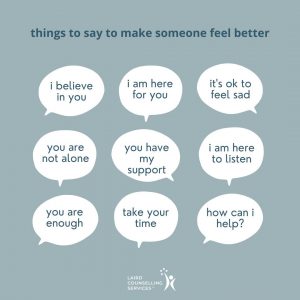 When someone we care about is going through a difficult time, it can be challenging to know what to say or how to help. We may worry about saying the wrong thing, making things worse, or appearing insensitive. It’s natural to feel this way because we want to offer support and comfort, but we also don’t want to make things worse.
The truth is that there is no magic phrase or solution that will fix everything. However, acknowledging their pain and letting them know that you are there for them can be a powerful show of support. Sometimes, simply listening without judgment can help someone feel heard and validated.
Ultimately, the most important thing is to be genuine and empathetic. You don’t have to have all the answers, but showing that you care and are willing to be there can make a world of difference to someone who is struggling.